You Won’t Believe What I Found at Gyeongju’s Ancient Temples
Walking through Gyeongju, I felt like I’d stepped into a living history book. This quiet city in South Korea holds over a thousand years of culture, hidden in temples, tombs, and mountain trails. From the golden dome of Cheomseongdae to the serene halls of Bulguksa Temple, every site tells a story. It’s not just sightseeing—it’s a deep dive into Korea’s soul. If you're chasing authenticity, this is where to start. The air carries a stillness that feels intentional, as if the city itself is preserving something sacred. There are no blaring horns or hurried crowds here. Instead, there’s a rhythm shaped by centuries of tradition, where ancient stone whispers and moss-covered rooftops guard memories of kings and monks. Gyeongju invites you not to rush, but to reflect.
Arrival in Gyeongju: First Impressions of a Timeless City
As the train slows into Gyeongju Station, the landscape shifts in a way that feels almost cinematic. Gone are the glass towers and neon signs of Seoul. In their place, low hills roll gently beneath a soft sky, dotted with patches of forest and the occasional tiled roof of a traditional house. The air feels lighter, cleaner, as though distance from the capital has preserved more than just space—it has preserved time. Visitors often remark on how unassuming the city appears at first glance, yet within minutes of stepping outside, the weight of its heritage becomes quietly evident.
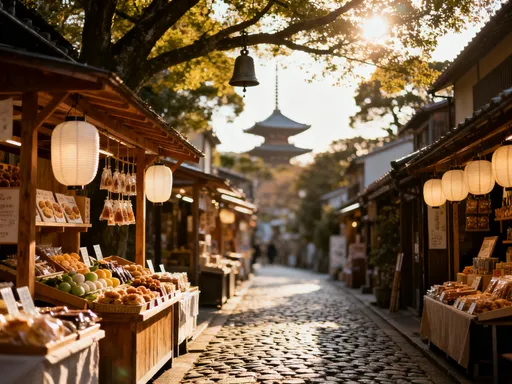
Unlike other historic destinations that feel curated for tourism, Gyeongju integrates its past into daily life. Bicycle paths wind past centuries-old burial mounds. Local markets sell persimmon cakes near stone relics from the Silla Dynasty. Even schoolchildren walk past UNESCO World Heritage sites on their way to class, treating them not as attractions but as neighbors. This seamless blend of the ancient and the everyday creates a rare authenticity, one that doesn’t rely on costumes or performances to feel real. The city doesn’t perform history—it lives it.
Urban planning here follows a subtle logic, guiding visitors naturally from one landmark to the next without the need for excessive signage or commercialization. A simple path along the Cheonggyecheon Stream leads to the heart of the historic district, where temples and museums emerge like natural extensions of the terrain. For travelers weary of crowded tourist hubs, Gyeongju offers a refreshing alternative: a place where discovery feels personal, not programmed.
Bulguksa Temple: Where Spirituality Meets Artistry
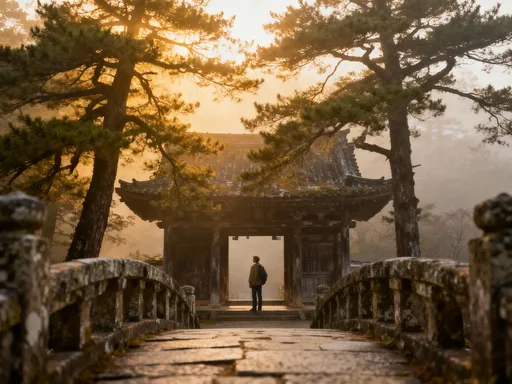
Standing at the base of the grand stone staircase leading to Bulguksa Temple, one cannot help but feel a sense of reverence. Built in the 8th century and meticulously restored over the centuries, this Buddhist temple complex is not just a religious site but a masterpiece of architectural harmony. The path upward crosses two iconic bridges—Cheongungyo (Blue Cloud Bridge) and Baegungyo (White Cloud Bridge)—symbolizing the journey from the earthly realm to enlightenment. Each step feels intentional, as if the structure itself is guiding the visitor toward inner peace.
The temple’s design reflects deep philosophical and spiritual principles. The intricate wooden halls, raised on stone platforms, are arranged to mirror the ideal Buddhist universe. Daeungjeon, the main hall, houses a gilded statue of the Buddha, seated in calm meditation beneath a canopy of carved lotus blossoms. Sunlight filters through the eaves in the early morning, casting golden patterns on the floor, while monks move quietly through rituals, their chants blending with the rustle of leaves. It is not uncommon for visitors to sit in silence for several minutes, absorbing the stillness that seems to radiate from the very walls.
Recognized as a UNESCO World Heritage Site, Bulguksa is celebrated not only for its spiritual significance but also for its craftsmanship. The stone terraces, drainage systems, and wooden joinery were engineered with precision that remains impressive even by modern standards. What makes the experience unforgettable, however, is not just the artistry but the atmosphere—an enduring sense of serenity that lingers long after leaving the temple grounds.
Seokguram Grotto: A Mind-Blowing Masterpiece Carved in Stone
Perched high on the slopes of Toham Mountain, the Seokguram Grotto is not easily reached—and that is part of its power. The uphill walk, winding through pine forests and rocky outcrops, builds anticipation with every step. There are no shortcuts, no mechanical lifts; the journey is meant to be earned. As the path narrows and the city fades below, the mind begins to quiet, preparing for what lies ahead. This pilgrimage-like approach mirrors the spiritual intent behind the grotto’s creation over 1,200 years ago.
When the entrance finally comes into view, the sight is nothing short of breathtaking. Inside the domed granite chamber, the central figure of the Buddha sits in perfect stillness, illuminated by natural light that streams through a carefully positioned skylight. His eyes are half-closed, his expression one of infinite compassion. Surrounding him are fifteen bodhisattvas, disciples, and heavenly guardians, each carved with individual features and serene expressions. The craftsmanship is so refined that the stone seems to breathe, the folds of the robes appearing soft, the faces alive with quiet wisdom.
What astonishes most is the engineering behind the grotto. Designed in the 8th century by Silla artisans, it features a ventilation system that prevents moisture buildup, preserving the sculptures for centuries. The dome’s curvature follows precise mathematical proportions, and the entire structure is aligned to face the East Sea, where the first light of dawn touches the Buddha’s face. This fusion of art, science, and spirituality makes Seokguram not just a religious monument but a testament to human ingenuity. Standing before the statue, many visitors report a profound emotional shift—a sense of peace that transcends language.
Tumuli Park: Royal Burial Mounds Wrapped in Mystery
Scattered across a wide, grassy expanse like emerald domes rising from the earth, the burial mounds of Tumuli Park offer a different kind of awe. These are the final resting places of Silla royalty, dating back to the 5th and 6th centuries. Unlike the towering pyramids of other ancient civilizations, these mounds are modest in height, covered in thick grass and wildflowers, blending gently into the landscape. There are over 150 of them, each a silent sentinel of a kingdom that once ruled much of the Korean Peninsula.
Archaeological excavations have revealed rich treasures within some of the tombs—gold crowns, jade ornaments, horse trappings, and bronze mirrors—indicating the wealth and sophistication of the Silla elite. One of the most famous finds, the gold crown from Geumgwanchong (Gold Crown Tomb), is now housed in the Gyeongju National Museum. While the mounds themselves are not open to the public, their presence evokes a deep sense of continuity. Walking among them, one feels connected to a lineage that shaped Korean culture, religion, and governance.
What makes Tumuli Park so moving is its quiet dignity. There are no dramatic monuments or elaborate inscriptions. The mounds speak through their simplicity, inviting contemplation rather than spectacle. Parents bring children to fly kites nearby. Elderly couples stroll along the pathways, pausing to sit on benches beneath the trees. The park is not a place of mourning but of remembrance—a space where history is not confined to textbooks but lives in the air, in the soil, in the way people move through the space with respect.
Cheomseongdae Observatory: Korea’s Oldest Astronomical Wonder
At twilight, when the sky begins its slow transformation from blue to lavender, Cheomseongdae stands in quiet majesty. This 9.4-meter-high stone tower, built in the 7th century during the reign of Queen Seondeok, is recognized as the oldest surviving observatory in East Asia. Its design is deceptively simple—27 layers of granite blocks stacked in a cylindrical form, narrowing toward the top, with a small rectangular window facing south. Yet within this simplicity lies profound scientific insight.
The observatory was used to track the movements of celestial bodies, particularly the sun and moon, to determine the changing seasons. This knowledge was essential for agricultural planning and for scheduling important Buddhist festivals. The alignment of the structure allows sunlight to enter the chamber at specific times of the year, marking solstices and equinoxes with remarkable accuracy. Scholars believe the number of stone layers may correspond to astronomical cycles, though the full extent of its design principles remains partially understood.
What makes Cheomseongdae so compelling is not just its age but its purpose. In an era when many civilizations were focused on conquest or survival, the Silla Kingdom invested in scientific observation. The tower stands as a symbol of curiosity, of a society that valued knowledge as a path to harmony. Visitors often linger here after sunset, watching the first stars appear above the ancient stones, imagining the astronomers of old recording their observations by candlelight. It is a reminder that the pursuit of understanding has always been a part of the human journey.
Walking the Oldest Streets: Exploring Yangdong Folk Village
Nestled in a valley between forested hills and terraced rice fields, Yangdong Folk Village feels like a scene from a historical painting. This UNESCO-listed village, established in the 15th century, is one of Korea’s largest and best-preserved traditional settlements. Rows of thatched-roof hanok houses follow the natural slope of the land, their wooden beams darkened by time, their courtyards lined with stone wells and laundry poles. There are no power lines, no modern signage—only the occasional flutter of laundry in the breeze to suggest that life still unfolds here.
The village was originally home to two prominent Confucian scholar families, the Son and Yi clans, whose descendants lived here for generations. The layout reflects Confucian ideals of hierarchy and harmony with nature. Ancestral halls stand at the center, surrounded by family residences arranged according to age and status. Even the placement of trees and streams follows geomantic principles, believed to ensure prosperity and balance. Walking through the narrow lanes, one can see preserved household items—wooden grain bins, ceramic jars, handwoven baskets—offering glimpses into a way of life that valued simplicity, discipline, and respect for elders.
What sets Yangdong apart from reconstructed heritage sites is its authenticity. While some homes are maintained as museums, others are still occupied by descendants, preserving traditions through daily practice. Visitors are asked to walk quietly, to remove shoes when entering certain buildings, and to avoid loud conversations. This respectful atmosphere enhances the sense of stepping into another era. For families traveling with children, the village offers a rare opportunity to see history not as a distant concept but as a lived reality.
Local Culture Beyond Monuments: Food, Craft, and Connection
Gyeongju’s heritage is not confined to stone and wood—it lives in its food, crafts, and daily interactions. One of the most memorable experiences for visitors is tasting hweori guksu, a traditional noodle dish believed to date back to the Silla Dynasty. Served in a light broth with thin, hand-cut noodles and seasonal vegetables, it is often enjoyed at small, family-run restaurants tucked away in quiet neighborhoods. The flavors are subtle but satisfying, a reflection of a culinary tradition that values balance and seasonality.
Another local specialty is Gyeongju bread, or *gyeongju hotteok*, a sweet pancake filled with red bean paste and shaped like a small dome, said to resemble the royal tombs. Found at street vendors near Anapji Pond, it has become a beloved snack for both locals and tourists. Beyond food, traditional crafts offer a tactile connection to the past. Workshops in the city center teach *giltaiji*, a decorative paper-cutting art used in ceremonial settings, allowing visitors to create their own souvenirs while learning about symbolic patterns and cultural meanings.
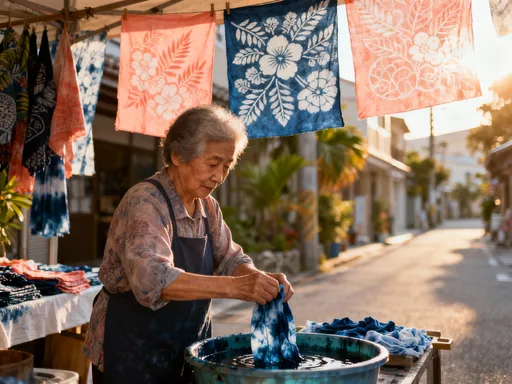
Perhaps the most enriching moments come from simple human connections. A shopkeeper offering a sample of homemade persimmon wine. A grandmother waving from her hanok doorway. A tea master explaining the ritual of preparing green tea in a quiet pavilion by the pond. These small exchanges, unscripted and genuine, deepen the sense of immersion. They remind travelers that culture is not just preserved in museums but carried in gestures, smiles, and shared meals.
Conclusion: Why Gyeongju Stays With You Long After You Leave
Gyeongju does not dazzle with spectacle. It does not rely on grand entrances or flashy attractions. Instead, it works quietly, seeping into the heart through moments of stillness, beauty, and connection. To walk its paths is to engage with a different rhythm of life—one shaped by centuries of reflection, craftsmanship, and harmony with nature. The temples, tombs, and villages are not just relics; they are living testaments to a culture that values depth over speed, meaning over novelty.
What makes Gyeongju unforgettable is not merely its historical significance but its emotional resonance. It invites introspection. It rewards slowness. In a world where travel often feels like a checklist, Gyeongju reminds us that the most meaningful journeys are not about how many places we see, but how deeply we feel. The golden light on the Buddha’s face, the hush inside the ancient observatory, the taste of warm bread by the pond—these are the fragments that linger.
For women who travel not just to explore the world but to nourish their spirits, Gyeongju offers something rare: a space to breathe, to reflect, to remember what matters. It is not just a destination. It is an invitation—to see history not as a distant echo, but as a living, breathing presence. And in that presence, one may just find a quieter, wiser version of oneself waiting to be rediscovered.