Hidden Corners of Rabat Where Light Meets Craft
You know that feeling when a place just clicks? For me, it was Rabat—sun-drenched walls, quiet alleys, and hands shaping centuries-old crafts. I didn’t expect the light here to be so magical, or how a simple pottery stall could stop me in my tracks. This isn’t just a city of monuments; it’s alive with artistry and moments begging to be captured. If you’re chasing photos that tell real stories—where beauty meets tradition—Rabat might just surprise you.
The Golden Hour Glow at the Kasbah of the Udayas
Nestled at the confluence of the Bou Regreg River and the Atlantic Ocean, the Kasbah of the Udayas stands as one of Rabat’s most photogenic treasures. This historic fortress, originally built by the Almohads in the 12th century, offers a maze of narrow, winding streets painted in crisp white with cobalt-blue doors and window frames. As the sun begins its descent, the golden hour transforms the entire neighborhood into a living canvas. The warm, low light bathes the walls in soft amber, casting elongated shadows that dance across the cobblestones. It’s during these fleeting moments—roughly 30 minutes before and after sunset—that photographers find the most compelling contrast and depth.
One of the best vantage points is the elevated terrace near Bab Oudaia, the main entrance to the kasbah. From here, you can frame the sweeping view of the river meeting the ocean, with fishing boats drifting slowly in the fading light. But equally powerful are the intimate scenes within the alleys: an elder seated on a low stool sipping mint tea, a child chasing a ball around the corner, or a woman hanging laundry between balconies. These candid moments reflect the rhythm of daily life, preserved within ancient walls. To capture them authentically, approach with a quiet presence. A small prime lens, such as a 35mm or 50mm, allows for natural framing without intrusion.
For optimal results, set your camera to aperture priority mode with an f-stop between f/5.6 and f/8 to maintain sharpness across the scene. ISO should be kept as low as possible—ideally 100 or 200—to avoid grain, though you may need to increase it slightly in dimmer corners. A tripod is rarely practical in such narrow passages, so mastering hand-held stability is key. Visit between 5:30 and 7:00 PM in summer, or 4:30 to 6:00 PM in winter, to catch the peak glow. Arriving early also helps avoid the clusters of tourists that gather near the main gate. Most importantly, ask permission before photographing individuals, especially in doorways or private courtyards. A smile and a gesture often open doors more than a lens ever could.
Photographing the Artisans at Old Town Workshops
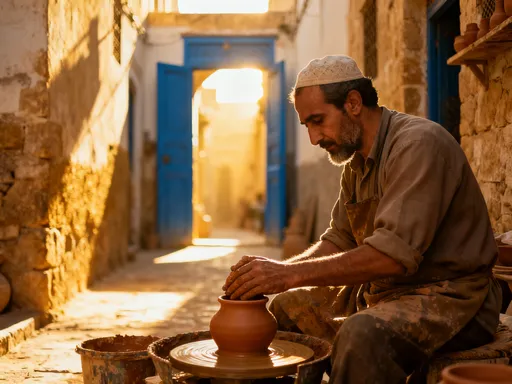
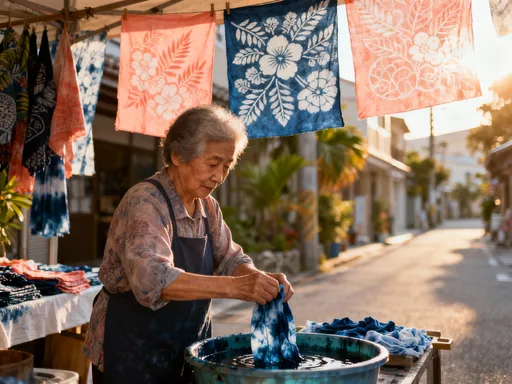
Just beyond the kasbah lies Rabat’s medina, a network of shaded alleyways where craftsmanship thrives in quiet workshops tucked behind unassuming facades. Unlike the bustling souks of Marrakech or Fes, Rabat’s old town maintains a slower, more contemplative pace—one that invites deeper observation. Here, artisans work with focused precision, their hands moving with the ease of decades of practice. The visual textures are rich: hammered copper reflecting flickering lamplight, thuya wood carved into intricate boxes, and leather dyed in earthy reds and deep indigos. These are not performances for tourists but genuine acts of creation, preserved through generations.
One of the most rewarding experiences is photographing a craftsman in his element. A coppersmith shaping a teapot with rhythmic taps, a weaver guiding threads on a loom, or a zellige tilemaker assembling geometric mosaics—each offers a narrative of patience and skill. To capture these moments respectfully, begin with conversation. A simple greeting in Arabic, such as “Salam alaikum,” followed by a request to take a few photos, often leads to warm acceptance. Many artisans appreciate the interest, especially when visitors show genuine curiosity. Some may even pause to demonstrate a technique or explain the symbolism in their designs.
When composing these portraits, focus on hands and tools—the storytellers of the craft. Use a shallow depth of field (f/2.8 to f/4) to blur the background and highlight the texture of wood grain or metal. Natural light from a high window or doorway often provides the most flattering illumination. Avoid using flash, which can feel intrusive and wash out subtle tones. Instead, increase your ISO slightly or use a lens with image stabilization. A 50mm or 85mm lens works beautifully for close-up details and environmental portraits.
Equally important is the ethical dimension of this photography. Always ask before shooting, and never pressure someone who declines. If you capture a meaningful image, consider offering a small print later or, better yet, supporting the artisan by purchasing a piece directly. Buying a hand-carved mirror frame or a pair of leather babouches not only preserves tradition but also creates a tangible connection to the people behind the craft. These interactions, when approached with humility and respect, often yield the most powerful images—ones that carry dignity, not just aesthetics.
The Royal Mausoleum Courtyard: Symmetry and Stillness
Among Rabat’s most serene and visually striking sites is the Royal Mausoleum, a modern monument that harmonizes with Morocco’s architectural heritage. Housing the tombs of King Mohammed V, his two sons, and other royal family members, the mausoleum is an exercise in balance, proportion, and quiet grandeur. The courtyard leading to the structure is a masterclass in symmetry—flanked by reflective pools, geometric tilework, and rows of cypress trees that stand like silent sentinels. The white marble surfaces, polished to a mirror-like finish, respond dramatically to changing light, making this an ideal location for architectural photography.
Early morning is the optimal time to visit, typically between 7:00 and 8:30 AM, when the sun rises behind the mausoleum and casts a soft, diffused glow across the plaza. At this hour, the site is often nearly empty, allowing for unobstructed compositions. The stillness of the water enhances reflections, creating mirror images of the green-tiled roof and arched colonnades. A wide-angle lens (16-35mm) is particularly effective here, enabling you to capture the full scale of the courtyard while emphasizing the converging lines of the walkways and pools. Use a tripod if possible to achieve maximum sharpness, especially when shooting at smaller apertures like f/11 or f/16 for deep focus.
The Andalusian-style gardens surrounding the mausoleum add layers of texture and color. Orange trees, jasmine, and rose bushes bloom seasonally, offering bursts of green and floral hues against the monochrome elegance of the stone. These elements can be framed as foreground interest, adding depth to your shots. Pay attention to the zellige tilework—hand-cut ceramic pieces arranged in complex geometric patterns. A macro lens can reveal the craftsmanship in these details, from the precision of the cuts to the subtle variations in glaze.
While the site is open to visitors, photography inside the mausoleum itself is prohibited out of respect for its sacred function. However, the exterior and courtyard offer more than enough material for a compelling visual story. The atmosphere here is one of reverence and tranquility, a reminder that some of the most powerful images are born not from action, but from stillness. This is a place to slow down, observe, and let the architecture speak through light, line, and reflection.
Capturing Local Markets: From Scent to Frame
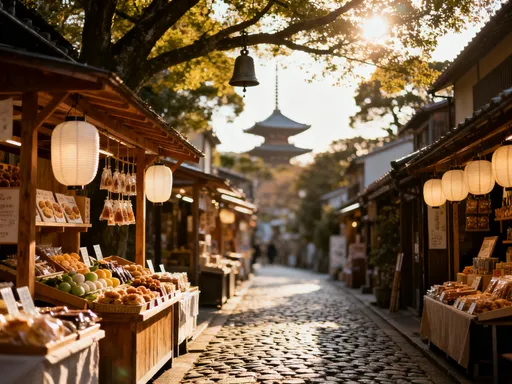
Rabat’s souks are not the largest or most famous in Morocco, but they possess a quiet authenticity that rewards the attentive photographer. Unlike more commercialized markets, these bazaars serve both locals and visitors, offering a glimpse into everyday Moroccan life. The sensory experience is immediate: the sharp tang of cumin and paprika, the earthy scent of leather, the sweet aroma of freshly baked msemen. Stalls overflow with color—pyramids of saffron, mounds of olives, handwoven rugs in warm ochres and deep blues, and rows of brass lanterns that catch the sunlight like captured stars.
To photograph these markets effectively, shift your focus from wide scenes to intimate details. A close-up of weathered hands measuring spices with a brass scale, the folds of a woolen blanket stacked in neat layers, or the shadow of a basket cast on a zellige-tiled floor—these are the images that convey story and texture. Use selective focus to draw attention to a single element: a sprig of fresh mint, a silver teapot, or the frayed edge of a carpet. A 50mm or 100mm macro lens allows for this precision, helping you isolate moments of beauty within the visual chaos.
Composition is key. Look for patterns—repeating shapes in stacked tagines, rhythmic lines of hanging garments, or the circular layers of a woven basket. The rule of thirds can guide your framing, but don’t be afraid to break it when symmetry or centrality strengthens the image. Natural light filtering through canvas awnings creates soft highlights and gentle contrasts, ideal for storytelling. Avoid using flash, which can flatten textures and startle vendors. Instead, adjust your ISO to maintain exposure, especially in dimmer corners of the market.
One of the most photogenic areas is the section dedicated to traditional crafts. Here, you’ll find ceramicists selling hand-painted tagines, women offering argan oil in amber bottles, and metalworkers polishing lanterns with cloths. These stalls are not only visually rich but also excellent places to engage with artisans. A respectful conversation often leads to a more natural, collaborative portrait. And if you choose to purchase something—a bottle of argan oil, a small ceramic bowl, or a hand-stitched cushion cover—you’re supporting local livelihoods while bringing home a piece of Rabat’s soul. These objects, when photographed later in natural light, can become still-life compositions that echo the market’s vibrant spirit.
Hassan Tower and the Unfinished Vision
Rising 44 meters above Rabat’s skyline, the Hassan Tower is a monument of ambition and resilience. Commissioned in the 12th century by Sultan Yacoub al-Mansour, it was intended to be the minaret of the largest mosque in the Islamic world. However, construction halted after the sultan’s death, leaving the tower incomplete—a powerful symbol of both grandeur and impermanence. Today, it stands as one of Morocco’s most iconic landmarks, its red sandstone walls glowing warmly in the morning and evening light. The surrounding plaza, vast and open, offers multiple perspectives for photographers seeking dramatic compositions.
One effective technique is to shoot from a low angle, using a wide lens to emphasize the tower’s height against the sky. Positioning yourself near the base and tilting the camera upward can create a sense of awe, especially when clouds drift behind the structure. Another compelling approach is to capture reflections—after a light rain, puddles on the plaza mirror the tower’s silhouette, doubling its presence. These transient moments require patience but yield striking, surreal images. A polarizing filter can help reduce glare on wet surfaces and enhance contrast in the sky.
The historical context adds depth to the visual experience. The ruins of the unfinished mosque lie just beyond the tower, their columns scattered like fallen sentinels. This juxtaposition of ambition and decay invites contemplation. To convey this narrative, include elements of the surrounding environment in your frame: a lone bird perched on a column, a visitor walking through the arches, or the shadow of a palm tree stretching across the stones. These human and natural elements ground the scene, transforming it from a static monument into a living landscape.
Pairing a visit to the Hassan Tower with a stop at a nearby street vendor enhances the cultural richness of your photography. Along the edges of the plaza, vendors sell traditional pastries like chebakia and sellou, their trays arranged like edible art. Capturing these moments—hands wrapping a warm pastry in paper, steam rising in the cool morning air—adds warmth and humanity to your portfolio. These small interactions remind us that history is not just in stone, but in the daily rituals that continue beside it.
Chellah’s Ruins: Where Nature Reclaims Stone
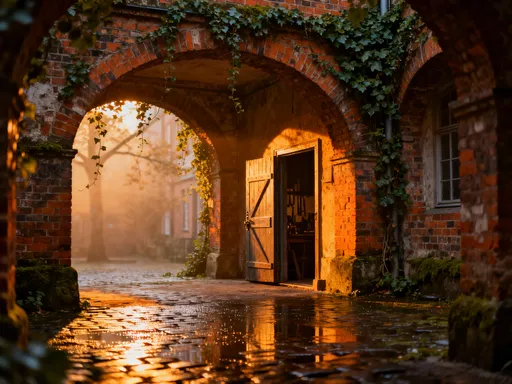
Just a short walk from the city center, the Chellah Necropolis offers a hauntingly beautiful fusion of Roman and Islamic heritage. Originally a Roman settlement known as Sala Colonia, the site was later transformed into a 14th-century Islamic burial ground, complete with minarets, mausoleums, and prayer halls. Over centuries, nature has reclaimed much of the site—ivy drapes over crumbling walls, fig trees grow through fractured arches, and storks nest atop ancient columns. The result is a poetic interplay between decay and renewal, where history is not preserved behind glass but allowed to breathe and change.
Dawn is the most magical time to photograph Chellah. As the first light filters through the trees, mist often rises from the grass, wrapping the ruins in a soft, ethereal glow. This is the perfect moment for long-exposure photography—set your camera on a tripod, use a shutter speed of 10 to 30 seconds, and let the motion of the mist create a dreamlike effect. The contrast between the stillness of the stone and the fluidity of the fog adds emotional depth to your images. A neutral density (ND) filter can help manage light during longer exposures, especially as the sun climbs higher.
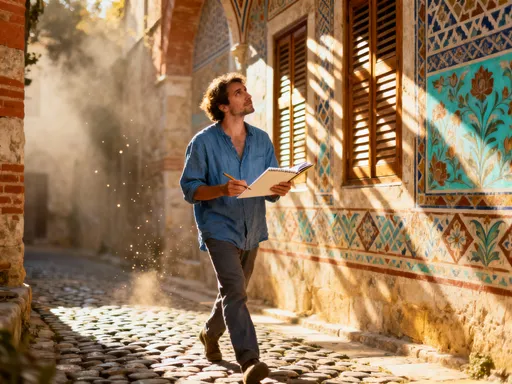
Explore the site slowly. The surviving zellige tilework, though fragmented, still displays intricate geometric patterns in blues, greens, and whites. These details are ideal subjects for macro photography, revealing the precision and artistry of Moroccan craftsmanship. Look for reflections in shallow pools, where rainwater collects after storms—these can double the visual impact of an arch or column. The sound of bird calls, particularly the storks that inhabit the site, adds to the atmosphere, making Chellah not just a visual destination but a sensory one.
Unlike more crowded attractions, Chellah remains relatively quiet, allowing for contemplative photography. There are no strict rules about where you can or cannot shoot, but always be mindful of visitors seeking quiet reflection. Keep your voice low and movements deliberate. The mood here encourages introspection, and your images will reflect that if you approach with care. Chellah is not just a ruin—it’s a living ecosystem where history, nature, and culture coexist in delicate balance.
Why Rabat’s Quiet Beauty Deserves Your Lens
In an age of curated travel and picture-perfect itineraries, Rabat offers something increasingly rare: authenticity. This is not a city designed for the camera, but one where the camera reveals what is already there—light dancing on stone, hands shaping heritage, and moments of quiet dignity in everyday life. Unlike more photographed Moroccan cities, Rabat does not demand attention. It invites you to look closer, to listen, to wait for the right light. And in doing so, it rewards you with images that carry meaning, not just beauty.
There is a certain humility in photographing a place like Rabat. It asks you to slow down, to engage with people not as subjects but as individuals, and to respect the spaces you enter. The city’s photogenic depth lies not in grand spectacles, but in subtle details—the curve of a spoon in a coppersmith’s hand, the pattern of shadows on a tiled floor, the reflection of a minaret in a morning puddle. These are the moments that, when captured with intention, become lasting memories.
For the 30- to 55-year-old traveler—often balancing family, work, and personal renewal—Rabat offers a restorative kind of journey. It is a place where you can walk without rush, breathe deeply, and reconnect with the quiet joy of observation. Your camera becomes not just a tool, but a companion in mindfulness. Each photo you take is a testament to presence, to the decision to see the world with care and curiosity.
So pack your lens, but leave behind the pressure to capture everything. Instead, come with the intention to see deeply. Let Rabat unfold at its own pace. Let the light guide you, the artisans inspire you, and the stillness remind you why you travel in the first place. In the end, the best photographs are not the ones that impress, but the ones that resonate—images that, when you return home, still speak of connection, tradition, and the quiet magic of a place where light meets craft.