You Won’t Believe What I Ate in Turin — A Food Lover’s Dream Come True
Turin, Italy, is more than just a quiet city wrapped in Alpine mist — it’s a hidden gem for food lovers. I went expecting chocolate and coffee, but left with my mind blown by rich wines, creamy risottos, and street food that tasted like family secrets. Every bite told a story of tradition, craftsmanship, and slow living. If you think Italian food stops at pizza and pasta, you’ve got to experience Turin’s soul on a plate.
First Impressions: A City That Feels Like Home
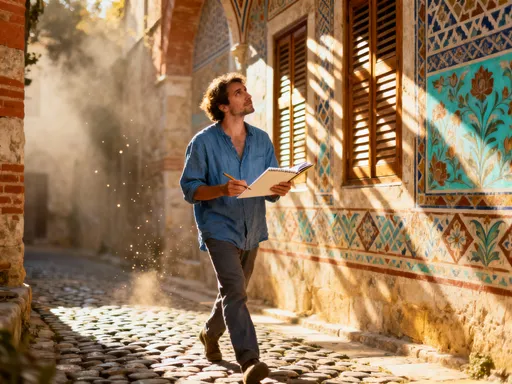
Arriving in Turin, I was struck by its elegant yet relaxed vibe — grand arcades, golden-hour light on Baroque buildings, and a calm that Rome or Florence never offered. Unlike the bustling crowds of more tourist-heavy cities, Turin unfolded at a gentle pace, where life seemed to move in harmony with the seasons and the rhythm of meals. The streets were wide and tree-lined, flanked by porticos that stretched for miles, offering shelter from rain or sun, inviting you to stroll without urgency. This was a city that didn’t perform for visitors; it simply lived.
I checked into a modest boutique hotel near Piazza Carignano, where the owner greeted me with a plate of local amaretti and a glass of sparkling Moscato. That small gesture set the tone — warmth without pretense. As I wandered through the cobblestone alleys of the Quadrilatero Romano, I noticed how many doors led not to shops, but to bustling trattorias or family-run delis. Even on a weekday afternoon, people lingered over espresso at sidewalk tables, reading newspapers or chatting with neighbors. There was no rush, no pressure to see everything. Instead, there was a quiet pride in daily rituals — especially around food.
Turin’s identity is deeply tied to its role as the former capital of the Kingdom of Italy and the home of the Savoy royal family. Yet, despite its regal past, the city never feels distant or formal. The grand piazzas and opulent palaces are there, yes — but so are the neighborhood bakeries, the market stalls piled high with seasonal produce, and the old men playing cards outside their favorite wine bars. This duality is part of what makes Turin special: it honors its history without being trapped by it. And nowhere is this balance more evident than on the plate.
Breakfast Like a Local: Where Coffee Meets Culture
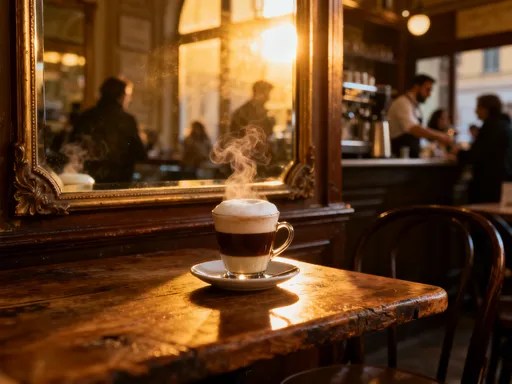
In Turin, breakfast isn’t a quick stop for a croissant and coffee to go — it’s the first act of a full day of culinary appreciation. I made it my mission to begin each morning at a historic caffè, where the art of coffee-making is treated with reverence. My favorite was Caffè al Bicerin, tucked in a narrow alley near the Mole Antonelliana. Stepping inside felt like entering a time capsule: dark wood paneling, marble counters, and the rich aroma of roasted beans mingling with melted chocolate.
Here, I tried the city’s most iconic morning drink — the bicerin. Served in a small glass, it’s a carefully layered elixir of espresso, thick hot chocolate, and whipped cream, meant to be stirred gently before drinking. The result is a velvety, bittersweet symphony that warms you from the inside out. I learned that this drink originated in the 18th century among Turin’s intellectuals, who would gather at these caffès to debate philosophy over cups of bicerin. It wasn’t just a beverage — it was fuel for thought, a symbol of the city’s intellectual and cultural refinement.
What struck me most was how differently Turin approaches coffee compared to other Italian cities. In Rome or Milan, espresso is often downed in one swift gulp at the bar. In Turin, it’s savored. People take their time, standing or sitting, often accompanied by a warm brioche still soft from the oven. Some pair their coffee with a small glass of grappa or a piece of dark chocolate. This slower, more deliberate ritual reflects a broader philosophy — that food is not just sustenance, but a moment to pause, connect, and appreciate.
I also discovered that many of Turin’s historic caffès began as literary salons or meeting places for artists and revolutionaries. Today, they remain social hubs, where generations gather for morning coffee, afternoon pastries, or evening aperitivi. By making breakfast a ritual, Turin sets the tone for the entire day — one of mindfulness, tradition, and quiet pleasure.
The Chocolate Capital That Outshines Paris
If there’s one thing Turin is famous for, it’s chocolate — and not just any chocolate, but a rich, velvety tradition that predates Nutella by centuries. I visited several artisanal chocolatiers in the city center, each one a temple to craftsmanship and flavor. At Guido Gobino, I watched through a glass window as chocolatiers hand-painted delicate pralines with edible gold leaf. At Venchi, I sampled a flight of drinking chocolates, each one darker and more complex than the last, some infused with hints of orange, cinnamon, or chili.
But the star of Turin’s chocolate story is the gianduiotto — a small, boat-shaped confection made from a blend of Piedmontese cocoa and Tonda Gentile hazelnuts. Silky, slightly grainy, and deeply aromatic, it melts on the tongue in a way that mass-produced chocolate never can. I learned that this treat was born out of necessity during the Napoleonic Wars, when cocoa became scarce and local chocolatiers began stretching it with locally grown hazelnuts. What started as a compromise became a masterpiece — a symbol of Turin’s ingenuity and resourcefulness.
I joined a guided tasting tour that took me through the city’s chocolate history, from royal confectioners to modern innovators. One stop was a small workshop where a third-generation chocolatier explained how they source beans directly from South America and roast them in small batches to preserve flavor. He emphasized that real chocolate isn’t just sweet — it’s complex, with notes of fruit, earth, and even smoke. “It’s not a candy,” he said. “It’s a food.”
What makes Turin’s chocolate culture so special is its accessibility. You don’t need to visit a high-end boutique to taste excellence. Even at neighborhood pasticcerias, the chocolate is made fresh daily, with care and pride. And unlike in Paris, where chocolate can feel luxurious to the point of intimidation, in Turin, it’s woven into everyday life — a morning treat, a gift for a friend, a reward after a long walk. This is chocolate not as spectacle, but as heritage.
Lunchtime Magic: Street Food with a Royal Twist
By midday, the streets of Turin come alive with the scent of roasting meat, frying dough, and simmering sauces. I followed the crowds to Via della Rosticceria, a narrow lane lined with rosticcerie — small eateries specializing in hot, ready-to-eat dishes. Here, workers on break, students, and even well-dressed professionals lined up for paper trays of polenta con salsiccia, fried arancini, and panini filled with roasted meats.
I tried a tramezzino stuffed with tuna, artichokes, and a touch of mayonnaise — simple ingredients, but perfectly balanced. The bread was soft and slightly buttery, the filling fresh and flavorful. It reminded me that in Turin, even the most humble meal is made with care. I learned that this tradition of affordable, high-quality street food has deep roots. During the industrial boom of the 19th and 20th centuries, Turin became a city of factory workers who needed hearty, satisfying meals during short lunch breaks. Rosticcerie rose to meet that need, offering generous portions at fair prices.
But what fascinated me most was the royal connection. The Savoy family, despite their palaces and banquets, were known to enjoy street food in secret. King Umberto I was said to love panini con la salamella — a grilled sausage sandwich served with mustard. This duality — of kings eating like commoners — speaks to a core truth about Turin: that good food transcends class. Whether served on fine china or in a paper tray, it’s judged by taste, not presentation.
I also sampled supplì — rice balls filled with mozzarella and tomato sauce, fried until golden — and marinated vegetable salads made with local peppers and olives. Every bite felt honest, unpretentious, and deeply satisfying. There were no fusion experiments or Instagrammable plating — just food made to nourish and delight. In a world where lunch is often rushed or eaten at a desk, Turin’s street food culture is a refreshing reminder that meals can be both quick and meaningful.
Wine & Dine: Piedmont’s Bold Flavors on the Plate
As evening fell, I made my way to a family-run trattoria just outside the city center, in the quiet neighborhood of Crocetta. The restaurant had no website, no English menu, and only ten tables. But word of mouth had led me there — and I quickly understood why. The owner, a silver-haired man named Giorgio, greeted me like an old friend and brought out a carafe of young Nebbiolo without asking. “Try this,” he said. “It’s from my cousin’s vineyard in Barbaresco. It needs food, not talk.”
Dinner was a revelation. I started with antipasti: thin slices of raw veal dressed with lemon and olive oil, creamy burrata with heirloom tomatoes, and a plate of local salumi, including the prized bresaola from nearby Valtellina. Then came the main course — brasato al vino, a beef stew slow-cooked in Barolo wine until the meat fell apart at the touch of a fork. The sauce was rich, almost syrupy, with deep notes of plum, spice, and oak. It was served with creamy polenta, which soaked up the juices like a dream.
For pasta, I had tajarin — a local variation of tagliolini, made with double the egg yolks for a golden, buttery richness. Tossed simply in melted butter and sage, it was a dish that let the quality of the ingredients shine. Each bite felt like a tribute to the land — the fertile hills of Piedmont, the cool mountain air, the generations of farmers and cooks who had perfected these recipes.
What stood out was the absence of pretension. There were no fancy garnishes, no dramatic plating. The food arrived in warm ceramic dishes, served by Giorgio’s wife and daughter, who checked in with gentle smiles. The wine list was handwritten, featuring small producers and older vintages. This wasn’t fine dining as performance — it was food made with patience, pride, and love. And it reminded me that the best meals aren’t about luxury; they’re about connection — to place, to people, to tradition.
Markets & Hidden Kitchens: Finding Authenticity Off the Beaten Path
To truly understand Turin’s food culture, I knew I had to go beyond restaurants. So I headed to Porta Palazzo, one of Europe’s largest open-air markets, where the city’s soul feels most alive. Spread across several blocks, the market buzzed with activity from dawn until dusk. Farmers from the surrounding countryside sold chestnuts, truffles, wild mushrooms, and wheels of fresh cheese still damp from the brine. Butchers displayed cuts of veal and pork with quiet pride. Fishmongers arranged glistening sardines and lake trout on beds of ice.
I spent hours wandering the stalls, chatting with vendors, and sampling whatever was offered. A woman handed me a slice of testa — spiced pork head cheese — on a piece of bread. Another offered a spoonful of fresh ricotta drizzled with honey. These small, unplanned moments were some of my most memorable — not because the food was extravagant, but because it was real.
One morning, I met a nonna named Maria at her ravioli stand. She rolled out pasta by hand, filled it with a mixture of ricotta and spinach, and sealed each piece with a practiced twist. “This is how my mother taught me,” she said, smiling. “No machines, no shortcuts.” I bought a small container and ate it that night with a drizzle of olive oil — simple, tender, and deeply comforting.
Later that week, I joined a small cooking class in a residential neighborhood, hosted by a local woman named Elena. In her cozy kitchen, we made agnolotti del plin — tiny, pinched pasta parcels filled with roasted meat and herbs. She taught us how to roll the dough thin enough to see light through, how to portion the filling just right, and how to pinch the edges with precision. As we worked, she shared stories of Sunday lunches with her family, of holidays centered around the table, of food as the language of love. By the end, we sat down to eat what we’d made, paired with a local Dolcetto. It wasn’t a professional kitchen — it was a home. And that made all the difference.
Why Turin Should Be Your Next Food Journey — And How to Do It Right
Turin doesn’t shout — it whispers, inviting you to slow down and savor. It’s not the most famous Italian city, nor the most photographed. But for those who love food not as spectacle but as story, it may be the most rewarding. This is a place where every meal feels intentional, where tradition is lived rather than performed, and where the simplest dishes often leave the deepest impression.
If you’re planning a visit, here’s how to do it right. Start by staying in a central neighborhood like San Salvario or Quadrilatero Romano, where you’ll be within walking distance of markets, cafés, and family-run restaurants. Book a guided food tour early in your trip — not to follow a checklist, but to learn the rhythms of the city. Visit Porta Palazzo in the morning, when the stalls are fullest and the air is cool. Try a bicerin at Caffè al Bicerin, but also stop at a neighborhood bar where locals gather.
For dinner, skip the tourist-heavy piazzas and seek out a trattoria in a residential area. Don’t be afraid of menus without pictures — the best places often have the simplest ones. Learn a few key phrases: “Un caffè, per favore,” “Che cosa mi consiglia?” (“What do you recommend?”), and “Delizioso” (“Delicious”). A little effort goes a long way.
Time your visit for autumn, when the white truffle season begins and the vineyards glow gold. But even in spring or summer, the food remains exceptional — fresh asparagus from the Po Valley, wild strawberries, young garlic. And don’t overlook the aperitivo hour, when bars offer small plates of snacks with your drink. In Turin, this isn’t just a happy hour — it’s a social ritual, a way to unwind and connect.
Turin taught me that true culinary joy isn’t found in extravagance, but in authenticity. It’s in the baker who wakes at 4 a.m. to knead dough, the farmer who tends his hazelnut grove with care, the grandmother who passes down a recipe word by word. This city doesn’t need to impress — it simply is. And if you’re ready to taste Italy beyond the postcards, beyond the headlines, Turin is waiting. All you need to do is slow down, open your heart, and take the first bite.