Lost in the Dunes: My Ahmadi Check-In You Gotta See to Believe
Stepping into Ahmadi, Kuwait, I expected oil rigs and desert monotony—but was greeted by windswept dunes, salt flats glowing at dawn, and vast open skies that felt almost otherworldly. This quiet corner of Kuwait hides untouched natural beauty far from the city’s buzz. If you're craving raw, unfiltered landscapes where solitude meets serenity, Ahmadi’s desert wilderness delivers in ways you’d never expect. More than a stopover or industrial waypoint, it's a place where the earth speaks in whispers, where light paints the sands in gold and rose, and where stillness becomes a kind of sanctuary. For travelers tired of crowded destinations and predictable scenery, Ahmadi offers something rare: authenticity written in wind and shadow.
First Impressions: What Ahmadi Really Feels Like
Arriving in Ahmadi, the transition is subtle but profound. The drive from Kuwait City eases from paved highways into a quieter, more open terrain. The skyline gives way to low-lying structures, sparse vegetation, and an ever-expanding horizon. At first glance, the town appears modest—functional buildings, wide roads, and the quiet hum of daily life. It’s easy to assume this is just another administrative outpost in Kuwait’s vast energy landscape. But venture just beyond the town’s edges, and the narrative shifts entirely.
Within minutes, the desert unfolds in waves of sand and stone. The air grows stiller, the sounds fewer. There are no crowds, no souvenir stalls, no guided tour buses. Instead, there’s an overwhelming sense of space—of land stretching endlessly in every direction. The dunes rise like soft sculptures, shaped anew each day by the wind. The gravel plains, known locally as reg, stretch in flat, rust-colored expanses, dotted with hardy shrubs that cling to survival. This is not the manicured desert of luxury eco-camps or tourist resorts. This is the desert as it truly is: unpolished, unapologetic, and deeply peaceful.
What makes Ahmadi stand out is precisely its lack of pretense. There are no billboards advertising attractions, no forced experiences. What you encounter is not curated—it’s real. For travelers who value authenticity over spectacle, this is a revelation. The absence of commercial development allows the natural environment to speak for itself. You don’t come here for entertainment; you come to witness, to listen, to feel the rhythm of a landscape that has existed long before modern life arrived.
The Beauty of Kuwait’s Desert Landscapes
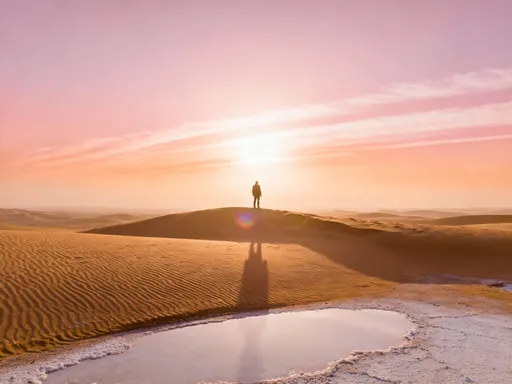
The desert around Ahmadi is not a barren wasteland, as some might assume. It is a place of intricate beauty, where subtle changes in light, texture, and color create a living canvas. During sunrise, the dunes ignite in shades of amber and rose, their crests glowing as if lit from within. By midday, the sun casts sharp shadows, revealing the delicate patterns etched by wind into the sand. As evening approaches, the sky transforms into a watercolor of lavender, peach, and deep indigo, melting into a night so clear that the Milky Way becomes visible to the naked eye.
The terrain itself is varied. Beyond the soft, rolling dunes are hard-packed salt flats, where the ground glistens like frosted glass under the morning sun. These flats, formed by ancient seabeds and seasonal flooding, stretch in silent, mirror-like expanses. Nearby, small wadis—dry riverbeds—cut through the landscape, offering shelter to the occasional desert fox or monitor lizard. The silence here is not empty; it’s full of presence. The faint rustle of wind over sand, the distant call of a bird, the crunch of gravel underfoot—each sound carries weight in the stillness.
For many visitors, this sensory shift is transformative. The vastness invites introspection. The lack of visual clutter—no buildings, no advertisements, no digital distractions—allows the mind to slow down. Travelers often describe a meditative quality to their time in the Ahmadi desert, a rare mental clarity that comes from being surrounded by such openness. It’s not about doing, but about being. In a world that glorifies busyness, this kind of quiet is a luxury few realize they’ve been missing.
Why Nature Lovers Are Quietly Flocking Here
In recent years, there has been a quiet but growing shift in travel preferences. More nature-conscious travelers are turning away from overcrowded destinations and seeking out places that offer authenticity, solitude, and ecological integrity. Arid environments, once overlooked in favor of tropical beaches or alpine peaks, are now being appreciated for their unique resilience and quiet grandeur. Ahmadi, with its unspoiled desert landscapes, fits perfectly into this emerging trend.
What draws these travelers is not just the beauty, but the fact that it remains largely untouched. Unlike more famous desert destinations that have been developed for tourism, Ahmadi has seen minimal infrastructure growth. There are no large resorts, no commercialized dune bashing tours, no mass-market attractions. This lack of development is not a drawback—it’s a benefit. It means the ecosystem remains intact, wildlife corridors are preserved, and the sense of solitude is genuine.
Low visitor numbers also contribute to the appeal. For those who have grown weary of long lines, packed viewpoints, and social media-famous landmarks, Ahmadi offers a refreshing alternative. You can spend hours in the desert without seeing another soul. This kind of solitude is increasingly rare in the modern world, and for many, it’s exactly what they’re searching for. It’s not about escaping society altogether, but about finding balance—moments of stillness to counter the constant noise of daily life.
Additionally, there’s a growing appreciation for environments that thrive under harsh conditions. The desert, with its extreme temperatures and limited water, is a testament to nature’s resilience. Plants like the desert hyacinth and the ghada shrub have adapted to survive with minimal resources. Reptiles and small mammals move silently through the sands, perfectly camouflaged. Observing this delicate balance fosters a deeper respect for the natural world and reminds visitors of the quiet strength found in simplicity.
How to Experience the Landscape Responsibly
Exploring the desert around Ahmadi is a privilege, and with that comes responsibility. The environment is fragile, and even small disturbances can have lasting impacts. To ensure that this landscape remains pristine for future visitors, it’s essential to follow responsible travel practices. The best time to visit is during the winter months, from November to March, when temperatures are mild and daytime highs range from 18°C to 25°C. Summer visits are strongly discouraged due to extreme heat, which can exceed 50°C and pose serious health risks.
Proper preparation is key. Travelers should wear lightweight, loose-fitting clothing that covers the skin to protect against sun exposure. A wide-brimmed hat, sunglasses, and high-SPF sunscreen are essential. Hydration is critical—carry at least four liters of water per person per day, even for short excursions. Never underestimate the desert’s ability to dehydrate the body, even when the air feels cool.
For those planning to venture off paved roads, a four-wheel-drive vehicle is necessary. Tires should be properly inflated for sand driving, and spare fuel, a first-aid kit, and a GPS device are recommended. However, the most important precaution is to avoid navigating alone. The desert terrain can be disorienting, with few landmarks and shifting sands that obscure tracks. Hiring a local driver with deep knowledge of the area is not only safer but also enriches the experience. These guides understand the land’s rhythms, know where wildlife is likely to be seen, and can share insights that no map can provide.
Equally important is adherence to Leave No Trace principles. Visitors should stay on established routes to prevent damaging fragile crusts on salt flats or compacting loose sand. All waste must be packed out—there are no trash services in the desert. Avoid disturbing plants or animals, and never remove natural materials like stones or shells. The goal is to leave the landscape exactly as you found it, ensuring that its beauty endures for generations to come.
Hidden Gems Within Reach
While Ahmadi itself is modest in size, its surrounding desert holds numerous quiet corners perfect for exploration. One of the most rewarding experiences is visiting a remote desert wadi at sunrise. These dry riverbeds, often nestled between low hills, offer shelter from the wind and a unique perspective on the landscape. As the first light spills over the dunes, the rocks warm quickly, releasing a faint, earthy scent. The contrast between shadow and light creates dramatic photography opportunities, with long silhouettes stretching across the sand.
Another hidden gem is the salt flat near Umm al-Aish, where the ground sparkles under morning light like a field of crushed glass. The flatness of the terrain creates a surreal sense of infinity, especially when viewed from a slight elevation. On calm days, the surface can reflect the sky, producing a mirror effect that blurs the line between earth and atmosphere. These areas are ideal for quiet reflection, meditation, or simply sitting in silence, absorbing the vastness.
For stargazers, the desert around Ahmadi is a dream. Light pollution is nearly nonexistent, allowing for unparalleled views of the night sky. On clear nights, constellations appear in sharp detail, and the band of the Milky Way stretches from horizon to horizon. Bringing a blanket and lying back on the warm sand offers one of the most peaceful ways to end a day. There’s no need for telescopes or equipment—just the naked eye and a willingness to look up.
While specific locations should not be widely publicized to prevent overcrowding, the types of experiences available are worth seeking. Whether it’s watching a desert fox dart across the sand at dusk, listening to the wind hum through a rocky pass, or feeling the cool night air settle over the dunes, these moments are the heart of what makes Ahmadi special. They are not grand spectacles, but quiet revelations—reminders of the beauty that exists when we slow down and pay attention.
Balancing Industry and Nature in Ahmadi
It would be incomplete to speak of Ahmadi without acknowledging its role in Kuwait’s energy sector. The region has long been central to the country’s oil production, with infrastructure and facilities supporting national operations. Yet, remarkably, this industrial presence has not erased the natural environment. Instead, there is a visible effort to contain development within designated zones, allowing the surrounding desert to remain undisturbed.
Driving through the area, one notices a clear separation between operational sites and open desert. Fences mark boundaries, access roads are limited, and large tracts of land remain untouched. This spatial discipline ensures that wildlife can move freely and that ecosystems function without constant human interference. It’s a model of coexistence—proof that economic activity and environmental preservation can exist side by side when managed with care.
For visitors, this balance offers a unique perspective. You are not entering a wilderness completely free of human influence, but one where human activity has been thoughtfully contained. This realism adds depth to the experience. It reminds us that conservation does not require total isolation—it can happen alongside development, through planning, respect, and restraint. Ahmadi becomes a case study in how even regions tied to heavy industry can protect their natural heritage.
Moreover, this balance reflects a growing awareness in Kuwait about the value of its natural landscapes. While the country is known for its modern cities and economic strength, there is increasing recognition that its deserts are not empty spaces, but ecosystems worthy of protection. Educational initiatives, environmental monitoring, and limited-access conservation areas are signs of this shift. Ahmadi, in many ways, stands at the intersection of tradition, industry, and environmental stewardship.
Final Thoughts: Rediscovering Kuwait Through Its Wild Side
Ahmadi challenges assumptions. It invites travelers to look beyond the expected and discover a Kuwait that is not defined solely by its cities or its oil, but by its land, its light, and its silence. This is a place where adventure doesn’t come in the form of adrenaline, but in the quiet act of noticing—the way the wind shapes the sand, how the stars fill the sky, or the peace that settles over you when you realize you are completely alone in a vast, beautiful world.
For women between 30 and 55—many of whom juggle family, work, and personal well-being—this kind of journey offers something deeply restorative. It’s not about escaping responsibility, but about reclaiming space for oneself. In the desert, there are no demands, no expectations, no noise. There is only the present moment, stretched out under an endless sky. That kind of clarity is not just rare—it’s revolutionary.
Traveling to Ahmadi is not about checking a destination off a list. It’s about shifting perspective. It’s about learning to see beauty in simplicity, strength in stillness, and wonder in the ordinary. It’s a reminder that adventure doesn’t always require faraway flights or luxury stays. Sometimes, it’s just a drive into the dunes, a moment of silence, and the courage to look closely at what’s been there all along.
So if you’re ready to step off the beaten path, to trade crowds for calm and noise for night skies, consider Ahmadi. Bring respect, preparation, and an open heart. Leave behind expectations. What you’ll find isn’t what guidebooks promise—but something more honest, more grounding, and more real. In the windswept dunes of Kuwait, you might just find a piece of yourself you didn’t know was missing.